
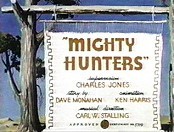
Mighty Hunters
- Studio
- Leon Schlesinger Studios
- Distributor
- Warner Bros.
Synopsis
We hear the war drums of Indians and see their shadows as they dance around the fire, only to find out that they are little (Native American) kids. Then they go out on a play hunt. One kid is pulled inside, and a papoose with a big candy cane is strapped on him. One kid tries to mount a stubborn mule. A couple of them have a bow and arrow and try to hunt a squirrel. A bear starts following them around trying to get the candy that the papoose is eating. He eventually backs them off a ledge, where one of the kids loses his pants. The bear goes after the candy and falls after getting it. Then it's bedtime, although the one kid is still trying to get on that mule.
Characters
Canyon Kiddies
Credits
Directing
- Director
- Chuck Jones (as Charles Jones)
Producing
- Producer
- Leon Schlesinger
Writing
- Writer
- Dave Monahan
Music
- Music
- Carl W. Stalling
Animation
- Animator
- Ken Harris
Art Department
- Backgrounds
- James Swinnerton
Production notes
Based on James Swinnerton's panel comic feature "Canyon Kiddies," about small Navajo children living in a remote part of the Grand Canyon, which Good Housekeeping magazine ran in color from 1922 to 1941. Swinnerton moved to the Southwest for his health and started doing paintings and cartoons about his new home.
Swinnerton himself painted 50 backgrounds in oils for this cartoon.
This was the only appearance of the Canyon Kiddies in animation. The cartoon contains no spoken dialogue.
The Canyon Kiddies were one of only two outside properties licensed for animated cartoons by Warner Brothers; the set of Dr. Seuss characters in "Horton Hatches The Egg" (1942) was the other.
This is the only Blue Ribbon cartoon released with it's original title cards and credits.
In September of 1943, beginning with A Feud There Was, Warner Bros. began re-releasing select color cartoons in their Blue Ribbon program. Typically the Blue Ribbon reissues received new opening sequences with Blue Ribbon title cards and standardized music. Cartoon production credits were also removed. Between ten and fifteen cartoons were released in any given year, with cartoons coming from as far back as 1935. The reissues continued until the close of the studio in the 1960's.
All Blue Ribbon cartoons were released as "Merrie Melodie" cartoons regardless of the original series. The first "Looney Tunes" short to be included in the Blue Ribbon series was The Hep Cat, which was added in 1949. The only current prints of many of these cartoons are the Blue Ribbon releases, although restoration of these cartoons with original elements and titles is always ongoing.


