

Odor-Able Kitty
- Studio
- Warner Bros. Cartoons, Inc.
- Distributor
- Warner Bros.
Synopsis
An abused cat paints himself like a skunk to get revenge on the cruel butcher, thereby attracting Pepé Le Pew's amorous attention.
Characters
Henry (Pepé Le Pew), Cat, Butcher, Woman, Dogs, Mouse, Skunks
Credits
Directing
- Director
- Chuck Jones (as Charles M. Jones)
Producing
- Producer
- Edward Selzer
Writing
- Writer
- Tedd Pierce
Animation
- Animator
- Robert Cannon
- Animators, uncredited
- Ken Harris, Ben Washam
Voices
- Voice
- Mel Blanc (Cat, Henry, Dog, Lady with Broom, Mouse, Bugs Bunny), Bea Benaderet (Woman, uncredited)
Music
- Music
- Carl W. Stalling
Production notes
The first Pepé Le Pew cartoon, though in this short he is referred to as Henry (and originally to be called, "Stinky."). Originally titled, "Forever Ambushed."
At the high point of the chase, the cat disguises himself as Bugs Bunny. All future incarnations of the chased cat are female.
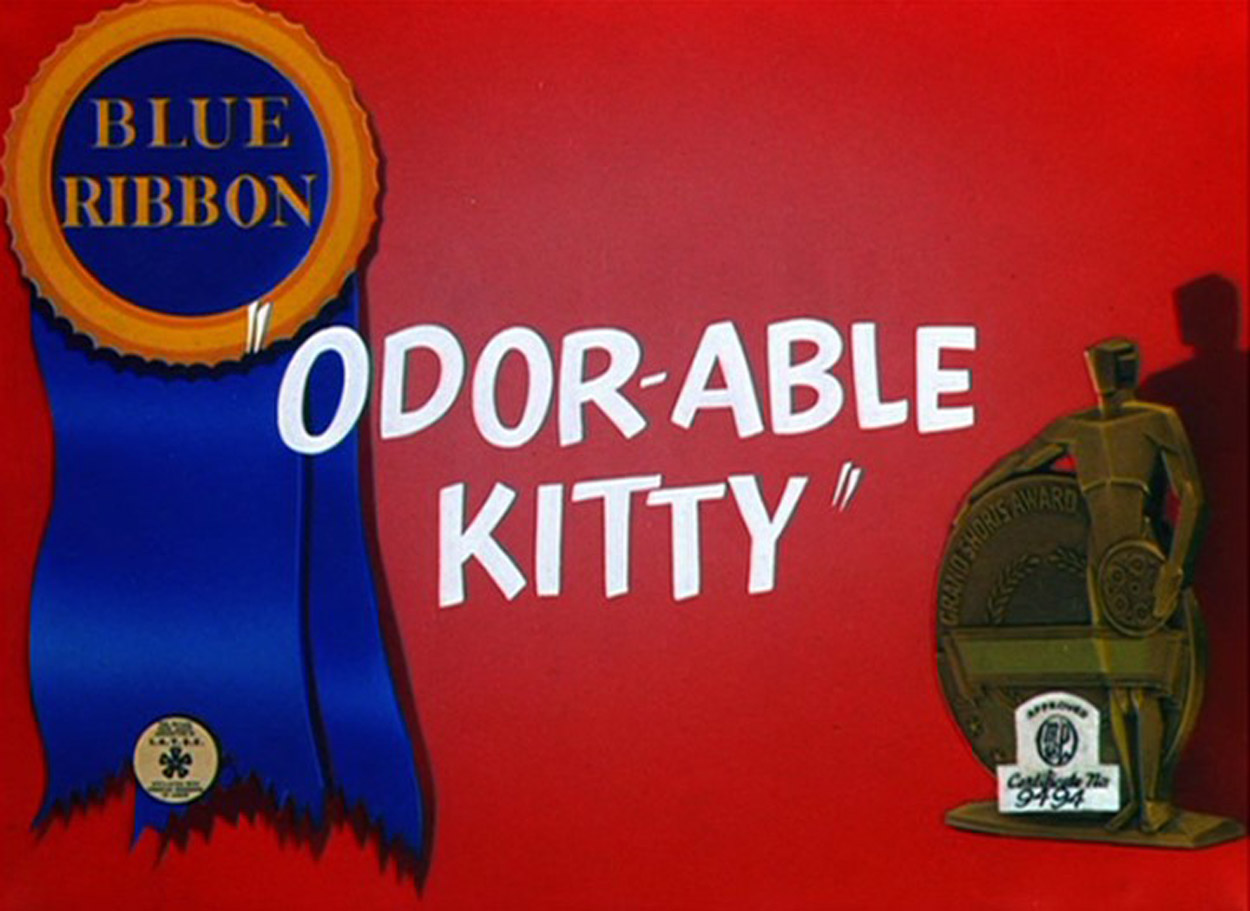
In September of 1943, beginning with A Feud There Was, Warner Bros. began re-releasing select color cartoons in their Blue Ribbon program. Typically the Blue Ribbon reissues received new opening sequences with Blue Ribbon title cards and standardized music. Cartoon production credits were also removed. Between ten and fifteen cartoons were released in any given year, with cartoons coming from as far back as 1935. The reissues continued until the close of the studio in the 1960's.
All Blue Ribbon cartoons were released as "Merrie Melodie" cartoons regardless of the original series. The first "Looney Tunes" short to be included in the Blue Ribbon series was The Hep Cat, which was added in 1949. The only current prints of many of these cartoons are the Blue Ribbon releases, although restoration of these cartoons with original elements and titles is always ongoing.
Pictures


Reviews
Odor-Able Kitty
According to legend, this story was originally meant for the Looney Tunes comic books. But, Chuck Jones went to writer Michael Maltese pleading for a story idea for his next theatrical cartoon. So, he and Mike developed the French skunk idea and that became Odor-able Kitty. Jones combined the performances of both Charles Boyer and Maurice Chevalier as well as the egotistical personality of writer Tedd Pierce and Pepe was born.
But, there was still work to be done. There were many elements in this cartoon that would not be a part of the routine. For one, the victim in this case is a MALE cat. He voluntarily paints himself and befowls himself in order to seem like a skunk so that the world would stop abusing him. Truly this cartoon is centred more around him and Pepe is merely a build up to a punchline. In the end it is revealed that Pepe is not French and also married as well as being a father. When the wife finds him romancing what looks like another skunk she whacks him with a rolling pin and the cat is free to go. The only aspect of Pepe that remianed after this was his persistance and his easily recognisable hop.
I'm quit sure the audience was pleased with this cartoon when it came out. But, the REAL reason Jones would make several more Pepe Le Pew cartoons was because of then producer Eddie Selzer. Ed ABSOLURELY HATED this cartoon and the star character. He especially hated the 'fractured french that Pepe spoke. But, like on so many other projects at the studio, Selzer would go on to be proved wrong with much egg on his face.