
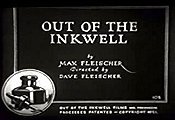
Clay Town
- Studio
- Inkwell Studios
- Distributor
- Red Seal Pictures, Inc.
Characters
Ko-Ko.
Live-Action Characters: Max Fleischer
Credits
Directing
- Director
- Dave Fleischer
Producing
- Producer
- Max Fleischer
- Executive Producer
- Alfred Weiss
Writing
- Writer
- Max Fleischer
Animation
Crew
- Created By
- Dave Fleischer
Production notes
Silent cartoon.
The Clown was redesigned in 1924 by Dick Huemer- and he was named Ko-Ko. By 1927, the hyphen was dropped and his name was changed to KoKo, and finally to Koko.
The Clown was redesigned in 1924 by Dick Huemer- and he was named Ko-Ko. By 1927, the hyphen was dropped and his name was changed to KoKo, and finally to Koko.
Reviews
Clay Town
This is a very unique entry in the series becasue is not only demonstrates a dramatic variation in the format, but is one of the earliest examples of Claymation known to have survived. In the opening, Max takes a blob of clay and forms the inkmwell. Then taking another blob, forms the pen. After Koko is produced, he asks for a piece of clay, out of which he makes a bust of Max that is a remarkably good image. But true to form, he has to play with the nose, a throwback to THE CHINAMAN (1920) and MODELING (1921). Later, Koko enters an entire clay village with houses looking like the mushroom-like huts of Munchkinland in THE WIZARD OF OZ. The doors on some of the huts animate into mouths. It is also interesting to note that the techinque used here is similar to the Stereoptical background process used in Fleischer's 1930s shorts. In this case, however the effect was achieved through the Rotograph, which allowed the photographing of animation cels over previously photographed footage and reshot frame-by-frame. This process later became the Arial Image method of processing animation and live action until more advanced compositing methods such as we have today came into being. An unusual departure work seeing.