
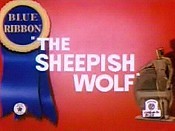
The Sheepish Wolf
- Studio
- Leon Schlesinger Studios
- Distributor
- Warner Bros.
Synopsis
A classy (and hungry) "Shakespearian" wolf, watching a flock of sheep, imagines them as lamb chops, steaks and other delicacies: "To eat or not to eat? Baa, what a question!" But a watchful sheepdog humorously chatters on and on about his responsibilities to protect the sheep.
The wolf dresses as a sheep, mingles with the flock, and almost catches a fleeing sheep, but he catches the sheepdog instead. The sheepdog scolds the disguised wolf and throws him into the midst of the flock. A black sheep realizes the deception and runs to the sheepdog to alert him. The black sheep talks like Eddie "Rochester" Anderson calling the sheepdog "Boss" in the same fashion as Rochester used to with Jack Benny.
The sheepdog has a hard time finding the disguised wolf among the sheep. He uses a mating horn that fools the wolf into turning into a Pepé Le Pew-type Casanova who grabs the sheepdog to romance him. He snaps out of it and flees.
The rest of the chase is interrupted by a spoof of the Little Red Riding Hood story. When the sheepdog brags to the sheep that he caught the wolf, all the sheep take off sheep costumes to show that they are actually wolves in disguise. "Which way did he go, George?"
Characters
Sheepdog, Wolf, Black Sheep, Sheep Herd, Wolves
Credits
Directing
- Director
- Isadore Freleng (as I. Freleng)
Producing
- Producer
- Leon Schlesinger
Writing
- Writer
- Melvin Millar
Voices
- Voice
- Mel Blanc (Sheepdog, Wolf, Black Sheep, Sheep Herd, Wolves [uncredited])
Music
- Music
- Carl W. Stalling
Animation
- Animator
- Ken Champin
- Animators, uncredited
- Richard Bickenbach, Gerry Chiniquy, Manuel Perez
Production notes
A predecessor to the Sam and Ralph series.
The current version has been edited to remove a scene where the black sheep does a Rochester impersonation, alerting the sheepdog to the wolf's presence.
In September of 1943, beginning with A Feud There Was, Warner Bros. began re-releasing select color cartoons in their Blue Ribbon program. Typically the Blue Ribbon reissues received new opening sequences with Blue Ribbon title cards and standardized music. Cartoon production credits were also removed. Between ten and fifteen cartoons were released in any given year, with cartoons coming from as far back as 1935. The reissues continued until the close of the studio in the 1960's.
All Blue Ribbon cartoons were released as "Merrie Melodie" cartoons regardless of the original series. The first "Looney Tunes" short to be included in the Blue Ribbon series was The Hep Cat, which was added in 1949. The only current prints of many of these cartoons are the Blue Ribbon releases, although restoration of these cartoons with original elements and titles is always ongoing.