
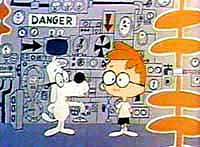
Surrender Of Cornwallis [Cornwallis' Surrender]
Surrender Of Cornwallis [Cornwallis' Surrender] is an episode of Peabody's Improbable History, directed by Gerard Baldwin and Frank Braxton, first aired on NBC on October 9, 1962.
- Studio
- Jay Ward Productions
Synopsis
Mr. Peabody and Sherman help Cornwallis surrender to General Washington.
Characters
Mr. Peabody, Sherman, Washington, Charles Cornwallis, Guard, Cornwallis's Mother
Credits
Directing
Producing
- Producer
- Jay Ward, Bill Scott, Ponsonby Britt O.B.E
Writing
Voices
- Voice
- Bill Scott (Mr. Peabody, Guard, Cornwallis's Mother), Walter Tetley (Sherman), Paul Frees (Charles Cornwallis, Washington)
Music
- Music
- Sheldon Allman
Animation
Editing
- Editor
- Skip Craig, Roger Donley
Production notes
Originally broadcast on The Bullwinkle Show.
The name change was accompanied with a change in networks, and a change in time slots, making this show the first prime-time animated show.
This segment featured dog-genius Mr. Peabody and his "boy" Sherman traveling through history via Peabody's "Wayback Machine." Each episode showed the duo traveling throughout the ages as they helped important historical figures (Columbus, Galileo, Edison, etc.) actually achieve the pivotal discoveries that changed history. Mr. Peabody used his dry wit to end each episode with a pun loosely disguised as a moral for Sherman and the audience to learn from.