
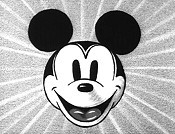
The Opry House
The Opry House is a 1929 Mickey Mouse theatrical cartoon from Walt Disney Studios, directed by Walt Disney and Ub Iwerks, released on March 28, 1929.
- Studio
- Walt Disney Studios
- Distributor
- Celebrity Pictures
Synopsis
Mickey owns and performs at his own theater. At various points, he goes on stage in drag as a harem girl, in a derby as a Hasidic Jew, and finally in a wig as a fancy pianist.
Characters
Mickey Mouse, Kat Nipp
Credits
Directing
- Director
- Walt Disney, Ub Iwerks
Producing
- Producer
- Walt Disney
Writing
- Writer
- Walt Disney
Music
- Music
- Carl W. Stalling
Animation
- Animator
- Ub Iwerks
Production notes
The release date noted above reflects the release date as currently acknowledged by the Walt Disney Company. Other sources- including some official Walt Disney Studios archival documentation- suggest March 20, 1929 as an alternate (and possibly more accurate!) release date. It is possibly that the official release dates were massaged in the early 1990's to bring them more in line with the indisputable U.S. Government copyright dates, thus protecting the Walt Disney Company copyright of Mickey Mouse and other characters from this cartoon, as well as the cartoon itself.
This is the first cartoon in which Mickey is seen wearing his now-famous white gloves. This film also marks the first appearance of Kat Nipp.
This is the first cartoon in which Mickey is seen wearing his now-famous white gloves. This film also marks the first appearance of Kat Nipp.
Reviews
The Opry House
Now this is good. We not only have Ub highlighting all his understanding of synching music with action, but a real showcase of Carl Stallings inate ability at composing. The shifts between not only songs, but musical styles he obviously would have honed during his years as a theatre musician, but here we get to see him experimenting with orchestration. Walt and Roy already feeding profits back into their work by having more instruments and therefor more opportunity at gags. Walt's directing of the gags to make it all entertaining instead of just a learning experiment on their part is the key to their success. The bravery at having the piano sequence last as long as it does shows great confidence in what they were doing. The music gags are so fully born and artfully matched to stallings timing, make you wonder if Friz wasn't still part of the team on this cartoon?
Elsewhere: Wikipedia