
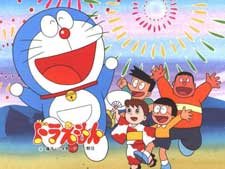
Typhoon Maker
Series title: ドラえもん
- Studio
- Shin-Ei Animation, Studio Take, Studio Joke, NTV Animation, Shogakukan
- Distributor
- TV Asahi
Synopsis
Gian bullies Nobita into tidying up his room so in revenge Doraemon uses a typhoon maker and Nobita controls it so it goes to Gian's house and room and leaves it looking like a typhoon hit it, which makes his mother start beating him up.
Characters
Nobita Nobi, Doraemon, Shizuka Minamoto, Takeshi "Gian" Goda, Suneo Honekawa, Dorami, Nobisuke Nobi, Tamako Nobi
Credits
Directing
Writing
Animation
- Animator
- Fusahito Nagaki, Sadao Tominaga, Hidekazu Nakamura
Voices
- Voice
- Noriko Ohara (Nobita Nobi), Nobuyo Ôyama (Doraemon), Michiko Nomura (Shizuka Minamoto), Kazuya Tatekabe (Takeshi "Gian" Goda), Kaneta Kimotsuki (Suneo Honekawa), Keiko Yokozawa (Dorami), Masayuki Kato (Nobisuke Nobi), Sachiko Chijimatsu (Tamako Nobi)
Music
- Music
- Shunsuke Kikuchi
Crew
- Design
- Fujiko F. Fujio, Kunio Okawara
- Character Design
- Eiichi Nakamura
- Storyboards
- Akitaro Daichi, Hideo Nishimaki, Hiroshi Fukutomi, Hiroshi Ishihara, Makoto Moriwaki, Masayuki Oozeki, Mineo Fuji, Minoru Okazaki, Satoshi Anakura, Tomomi Mochizuki, Toshifumi Takizawa, Tsutomu Yabuki
Production notes
Originally a 26-episode TV series in 1973, this second series ran over 1000 episodes.
Although this series often has been credited to the Fujiko-Fujio design duo, it actually was created solely by Hiroshi "Fujiko" Fujimoto.
An ongoing series, "Doraemon" is expected to have more than 2,000 episodes by the end of 2004.
Other series included 617 10-minute episodes and more than 900 25-minute episodes.
"Doraemon" movies, lasting about 90 minutes each, have been issued regularly during the Japanese spring break. These started with "Nobita's Dinosaur" (1980) and were followed by "Nobita the Space Colonist," "Nobita's Magic Tower," "Nobita's Undersea Fortress," "Nobita Goes to Hell," "Nobita's Little Star Wars" and "Nobita and the Iron Warrior" (1986).
Later movies included "Nobita's Parrallel Journey to the West" (1988), "Nobita at the Birth of Japan," "Nobita's Animal Planet," "Nobita's Anmal Arabian Nights," "Nobita in Snow Country," "Nobita's Tin-Plate Labyrinth" and "Nobita's Fantastic Three Musketeers."
A 1995 film, "The Birth of Doraemon," traced the series' origins. A new series of films followed: "Nobita's Galctic Express, "Nobita's Clockwork City," "Nobita's South Sea Adventure" (which set a Japanese box-office record for animated films), "Nobita Gets Lost in Space," "Nobita and the Legend of the Sun King" and "Nobita's Winged Heroes."
Dozens of Doraemon TV specials have appeared through the years. Many have been combined with other specials to create additional "movies": "It's New Year!", "It's Summer!", "It's Autumn!", "It's Winter!", "It's Spring!", "Summer Holiday," "Doraemon Meets Hattori the Ninja," "Featherplane," "What Am I for Momotaro?", "Come Back Doraemon," "Doraemon and Itchy the Stray," "Doraemon's Time Capsula for 2001" and "Treasure of Shinugami Mountain."
Doraemon's "little sister" from the future, Dorami-chan, was featured in several short films, starting with "Dorami-chan: Mini-Dora SOS" (1981).