
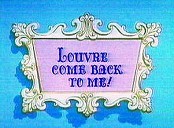
Louvre Come Back To Me!
Louvre Come Back To Me! is a 1962 Looney Tunes theatrical cartoon from Warner Bros. Pictures, Inc., Vitagraph Releases, directed by Chuck Jones and Maurice Noble, released on August 18, 1962.
- Studio
- Warner Bros. Pictures, Inc., Vitagraph Releases
- Distributor
- Warner Bros.
Synopsis
Pepé Le Pew competes with an orange cat for the affection of another girl cat in an art gallery.
Characters
Pepé Le Pew, Cat, Female Cat
Credits
Directing
- Director
- Chuck Jones
- Co-directed By
- Maurice Noble
Producing
- Producer
- David H. DePatie
Writing
- Writer
- John Dunn
Voices
- Voice
- Mel Blanc (Pepé Le Pew), Julie Bennett
Music
- Music
- Milt Franklyn
Animation
- Animator
- Richard Thompson, Bob Bransford, Tom Ray, Ken Harris
Art Department
- Backgrounds
- Tom O'Loughlin, Philip De Guard
Editing
- Editor
- Treg Brown
Production notes
Pepé Le Pew's last classic theatrical release.
Pictures


Reviews
Louvre Come Back To Me!
According to legend, Jones had been fired from Warner Bros. around this time. So, I guess he wanted his last Pepe to end with a bang. Although, this cartoon is not quite the bang he had hoped it would be, the attempt is certainly to be admired.
This time, the formula is shaken up a bit by the addition of a jealous boyfriend. Yes, Penelope is already in a relationship when Pepe makes his intentions known. Along with them playing with the works of art in the museum, the boyfriend angle interupts Pepe's routine in a way that is both refreshing and disappointing. It's refreshing in that we see how Pepe goes about his day when there is some competition this time. But, it's disappointing in that the boyfriend takes up too much of the time. The sequence where Pepe enacts a duel with pistols while the boy cat is trying to hold his breath around Pepe is much too long for the pace of it and brings things to a crawl really. In fact, from the looks of things, that sequence took so long that Jones ended this cartoon with a series of "paintings come to life" gags and ends with the weakest one. A cartoon that started out with such promise ends on a lacklustre note.
Oh well, despite that, this and many other Pepe cartoons from the golden era are still entertaining and well worth a second, third or 200 millionth look. Pepe would never have it so good after that.
Elsewhere: Wikipedia