
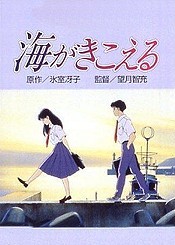
Umi Ga Kikoeru
Umi Ga Kikoeru is a 1993 Studio Ghibli animated TV special from Studio Ghibli, Tokuma, directed by Tomomi Mochuzuki, released on May 5, 1993.
Also known as: 海がきこえる
English titles: Ocean Waves, I Can Hear The Ocean, I Can Hear The Sea
- Studio
- Studio Ghibli, Tokuma
- Animation studio
- Anime Torotoro, Group Donguri, J.C. Staff, Madhouse Studios, Oh production, Studio Cockpit
Synopsis
A subtle, poignant and wonderfully detailed story of adolescence and teenage isolation. Taku and best friend Yutaka are headed back to school for what looks like another uneventful year. They soon find their friendship tested by the arrival of beautiful Rikako, a new transfer student from Tokyo. Rikako is mercurial and manipulative, with a temperament that vacillates wildly, from flirty and flippant to melancholic. When Taku joins her on a trip to Tokyo, the school erupts with rumors, and all three friends are forced to come to terms with their changing relationships. Full of shots bathed in a palette of pleasingly soft pastel colors and rich in the unexpected visual details typical of Ghibli's most revered works, Ocean Waves is an accomplished teenage drama and a true discovery.
Characters
Taku Morisaki, Yutaka Matsuno, Rikako Mutou, Taku's Mother, Tadashi Yamao, Okada, Yumi Kohama, Kawamura, Rikako's Father
Credits
Directing
- Director
- Tomomi Mochuzuki
Producing
- Producer
- Nozomu Takahashi (Executive Producer)
Writing
- Writer
- Kaori Nakamura
- Based On The Original Novel by
- Saeko Himuro, Saeko Himuro
Voices
- Voice
- Nobuo Tobita (Taku Morisaki), Toshihiko Seki (Yutaka Matsuno), Youko Sakamoto (Rikako Mutou), Ai Satou (Taku's mother), Hikaru Midorikawa (Tadashi Yamao), Jun'ichi Kanemaru (Okada), Kae Araki (Yumi Kohama), Kan Tokumaru (Kawamura), Kinryuu Arimoto (Rikako's father), Reiko Suzuki (Restaurant Hostess), Sumi Shimamoto (Rikako's Father's Lover), Takahiro Sakurai (Boy), Aya Hisakawa (Girl), Takeshi Watabe (Principal), Tomokazu Seki (Minarai), Toshiharu Sakurai (Male student), Yuri Amano (Akiko Shimizu), Kihachiro Uemura, Mari Maruta, Rin Mizuhara, Takumi Yamazaki
Music
- Music
- Shigeru Nagata
- Theme Song Composition
- Shigeru Nagata, Tomomi Mochizuki
Animation
- Animation Director
- Katsuya Kondo
- Animator
- Katsuya Kondo
- Key Animation
- Kenichi Yoshida, Mitsuo Iso
- Supporting Animation
- Anime Torotoro, J.C. Staff
Art Department
- Art Director
- Naoya Tanaka
- Character Design
- Katsuya Kondo
- Design
- Yoshifumi Kondô
Camera
- Director of Photography
- Atsushi Okui
- Photography
- Youichi Hasegawa
Editing
- Editor
- Takeshi Seyama
Sound
- Sound Adjustment
- Hisanori Ooshiro
- Sound Effects
- Masakazu Yokoyama
- Sound Production
- Audio Planning U
Crew
- Film Developing
- Imagica
- Dialect Instruction
- Sumi Shimamoto, Takeshi Watabe
- Planning
- Toshio Suzuki
- Theme Song Performance
- Youko Sakamoto
Companies and other credits
- Animation Production: Studio Ghibli
- Supporting Animation: Group Donguri
- Supporting Animation: Madhouse Studios
- Supporting Animation: Oh production
- Supporting Animation: Studio Cockpit
- Ink & Paint: Studio Killy
- Ink & Paint: Studio Pierrot Fukuoka
- Photography: Asahi Production
- Recording Studio: APU Studio
Production notes
Released as a TV special.
Based on a Saeko Himura novel, which was originally serialized in "Animage" magazine.
The only television drama produced by Studio Ghibli, this was made by younger members of the studio for a theme broadcast during the Golden Week holiday.
This was the first Studio Ghibli film directed by someone other than studio founders Hayao Miyazaki and Isao Takahata; young director Tomomi Mochizuki headed a talented team of young Ghibli employees in creating this adaptation of Himuro's best-selling novel.
Director Tomomi Mochizuki was briefly hospitalized due to the stress of making this film and "Here is Greenwood" simultaneously.
This film was rarely seen outside Japan; it was never released in North America theatrically or on any home viewing format. Finally, it was screened at Vancouver's Pacific Cinematheque on December 12, 2012 as part of a Studio Ghibli retrospective.
Pictures

Elsewhere: Wikipedia